Air Facts: Glass Cockpit Flying
Air Facts: Glass Cockpit Flying
Training Notes: Glass Cockpit Flying
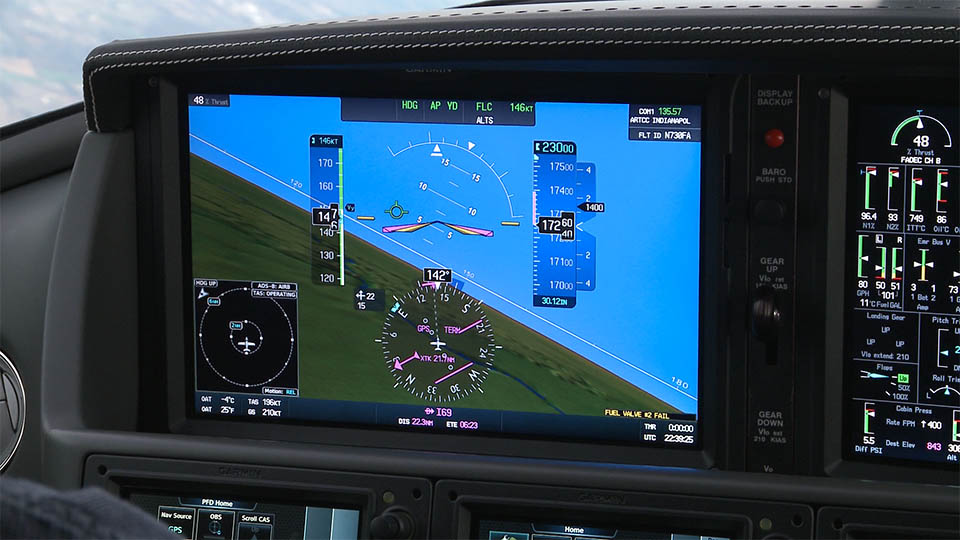
This section introduces the differences between traditional "steam gauge" cockpits and modern glass cockpits, highlighting important considerations for new pilots transitioning to glass cockpit flying.
Understanding Glass Cockpits
- Traditional vs. Glass Cockpits:
- Traditional "six-pack" cockpits:
- Use vacuum-powered instruments for attitude and heading.
- Require constant resetting of the heading indicator.
- Glass cockpits:
- Use solid-state sensors called Attitude Heading Reference Systems (AHRS).
- More reliable than mechanical vacuum pumps.
- Heading indicators do not require constant resetting.
- Traditional "six-pack" cockpits:
- Advantages of Glass Cockpits:
- Large color screens are easier to read, especially in turbulence.
- Display more information:
- Winds aloft.
- Nearest airports.
- Active flight plan.
Transitioning to Glass Cockpits
- Challenges with Glass Cockpits:
- Less "glance value":
- Cannot quickly gauge instruments without reading exact numbers.
- Airspeed and altitude tapes require reading precise values.
- Less "glance value":
- Habits to Develop:
- Set the bugs on the primary flight display:
- Use knobs to set bugs for altitude, heading, and airspeed.
- Helps with autopilot and hand-flying.
- Understand trend lines:
- Magenta lines next to tapes show projected values six seconds ahead.
- Tall trend lines indicate the airplane is not stabilized.
- Learn common flight profiles:
- Familiarize with power settings and configurations for different phases of flight.
- Configure the airplane, then fly the needles.
- Set the bugs on the primary flight display:
System Familiarization
- Read the Manuals:
- Glass cockpits vary between manufacturers and models.
- Focus on failure modes and emergency procedures.
- Understand System Nuances:
- Know how AHRS failures differ from screen failures.
- Be aware of backup options for AHRS and primary flight displays.
- Know the duration of backup battery power.
Hybrid Glass-Steam Cockpits
- Not all glass cockpits are fully integrated systems:
- Some replace single instruments with digital displays.
- More affordable and reliable than vacuum pumps.
- Importance of Understanding Sensors:
- Critical to know which instruments are driven by which sensors.
Remember, while glass cockpits may seem different, the fundamentals of IFR flight remain the same. Focusing on basic attitude flying is essential, and the enhanced displays in glass cockpits can make this even easier.