The IFR Flight To Chicago Midway
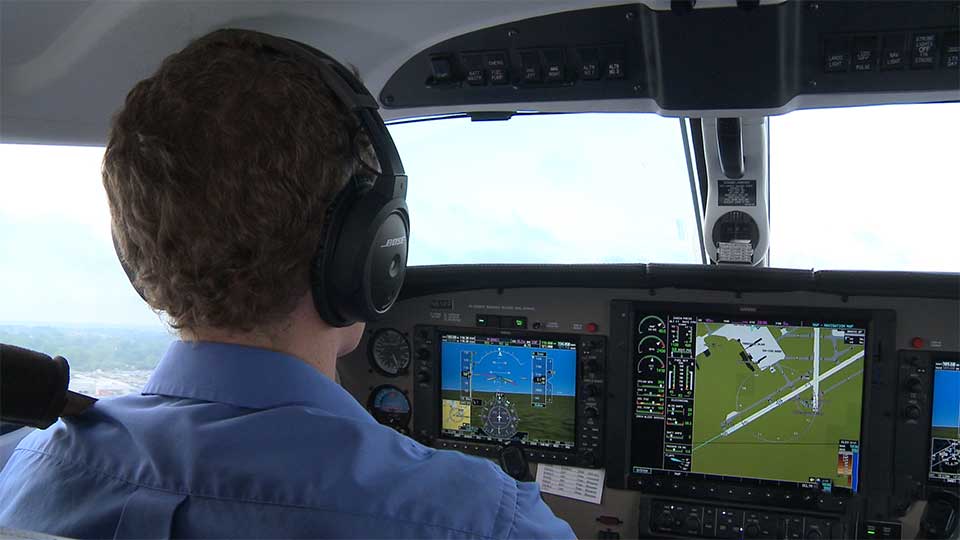
The IFR Flight To Chicago Midway
Training Notes: The IFR Flight To Chicago Midway
This section covers an IFR flight from Dayton International Airport to Chicago Midway Airport, demonstrating practical instrument flying, flight planning, and weather considerations for new student pilots.
Introduction to Instrument Flying:
- Instrument flying simplifies flying to an orderly and understandable process.
- Matching instrument readings to charts and procedures is key.
- The goal is to fly safely in clouds from one destination to another.
Flight Planning and Weather Briefing:
- Importance of thorough weather briefing for IFR flights:
- Check weather at departure, en route, and destination airports.
- Use aviation apps for a big picture and detailed weather information.
- Look for precipitation, thunderstorms, icing, turbulence, winds, and temperatures aloft.
- Analyzing weather charts and reports:
- Surface analysis charts to understand pressure systems and fronts.
- METARs and TAFs for current and forecasted weather conditions.
- Freezing levels and pilot reports (PIREPs) for icing information.
- Retrieving a full weather briefing and NOTAMs from Flight Service.
Flight Planning and Filing an IFR Flight Plan:
- Use flight planning apps to calculate time en route and fuel requirements.
- Select an appropriate cruising altitude considering weather conditions:
- Plan to fly above the freezing level if the aircraft is certified for known icing.
- Choose lower altitudes to avoid icing if not equipped.
- File an IFR flight plan electronically through aviation apps.
- Receive confirmation and expected route from ATC.
Preflight and Cockpit Preparation:
- Conduct a thorough preflight inspection despite weather conditions.
- Brief the roles and responsibilities of each pilot before engine start:
- One pilot handles flying the aircraft.
- The other manages ATC communications and navigation.
- Tune in ATIS for departure airport to get the latest weather and information.
Obtaining Clearance and Taxiing:
- Contact Clearance Delivery to receive IFR clearance:
- Listen carefully and read back all instructions.
- Program the flight plan into the GPS before taxiing.
- Request taxi clearance from Ground Control as per VFR procedures.
- Complete run-up and before-takeoff checklists prior to takeoff clearance.
Departure and Climb:
- Contact Tower for takeoff clearance when ready.
- After takeoff, enter clouds and transition to instrument flying:
- Rely on instruments to maintain control and orientation.
- Trust your training to overcome disorientation.
- Monitor ATC instructions for heading and altitude changes.
- Climb to assigned intermediate altitudes as directed by ATC.
En Route Flight:
- Communicate with ATC centers and adhere to handoffs.
- Be prepared for route amendments from ATC and adjust navigation accordingly.
- Monitor weather en route using onboard systems:
- Use XM weather and onboard radar to check for precipitation and storms.
- Stay aware of icing levels and reports from other pilots.
- Check updated weather conditions for the destination airport:
- Tune into ATIS periodically for the latest information.
- Note changes in ceilings, visibility, and approach in use.
- Utilize autopilot to reduce workload while maintaining vigilance.
Approach Briefing and Preparation:
- Begin preparing for the approach well before reaching the destination.
- Review the approach chart thoroughly:
- Identify important details such as frequencies, altitudes, and missed approach procedures.
- Brief the approach with the flying pilot.
- Load the instrument approach into the GPS and flight plan.
- Set up navigation radios and verify all settings.
Instrument Approach and Landing:
- Follow ATC vectors and altitude assignments for sequencing into busy airspace.
- Receive approach clearance and intercept the final approach course:
- Monitor the localizer and glide slope indicators.
- Adjust heading and altitude to stay on course and glide path.
- Use synthetic vision and other advanced avionics features if available.
- Communicate with Tower upon final approach clearance.
- Break out of clouds at decision altitude and establish visual contact with the runway.
- Proceed to a normal landing, maintaining vigilance for wake turbulence and other factors.
Post-Landing Procedures:
- Understand that ATC will cancel the IFR flight plan upon landing at a tower-controlled airport.
- Exit the runway promptly and follow taxi instructions to parking.
- Complete after-landing checklists and secure the aircraft as necessary.
Remember, thorough planning, effective communication, and adherence to procedures are key to a safe and successful IFR flight.